
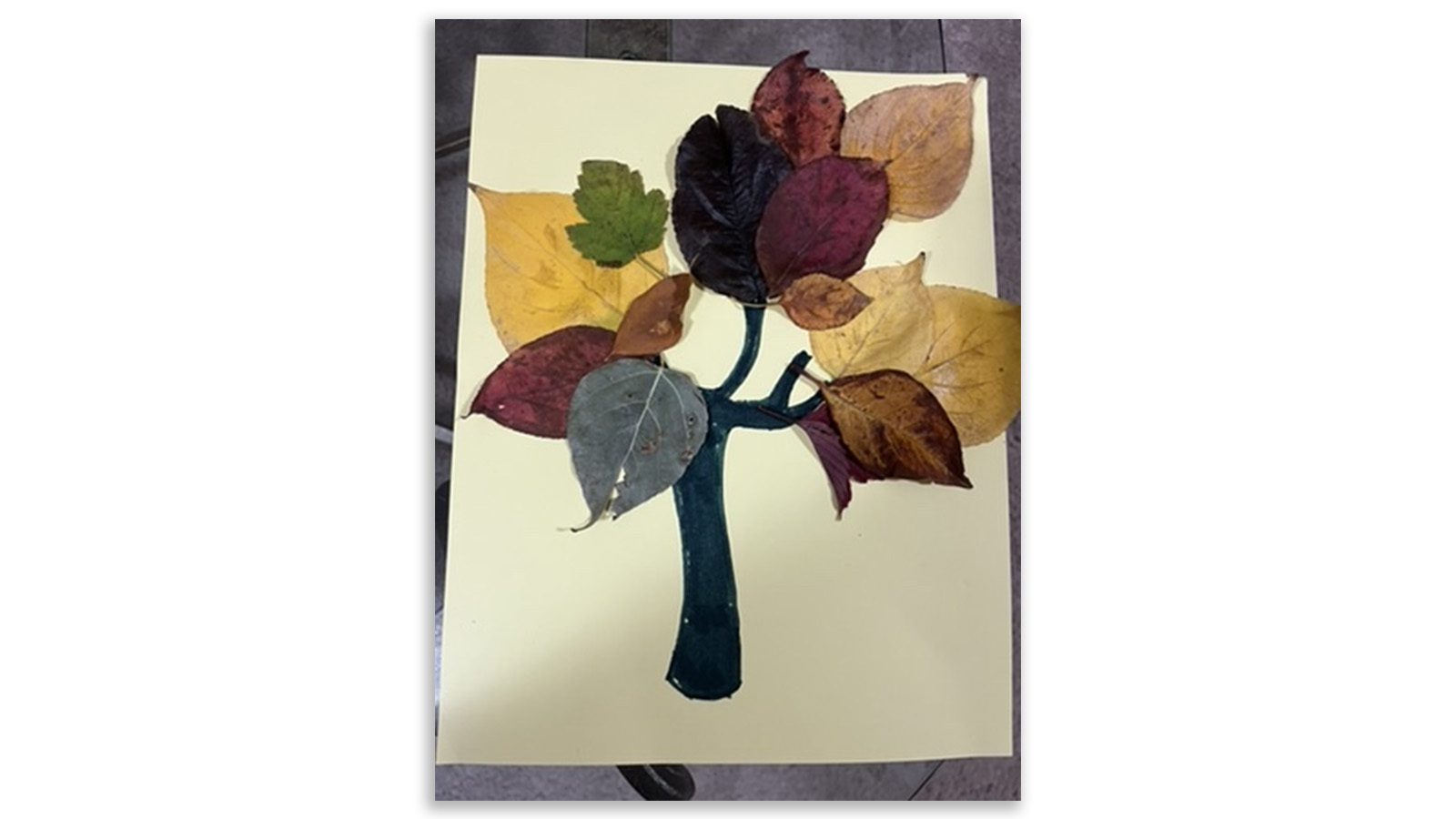
With the leaves starting to change, a nature walk can be a fun way to spend some time outside and work on a few skills along the way.
Our occupational and speech therapy team recommends a nature walk and tree craft as a fun way to build communication, motor, and visual skills. Talking about what you see, feel, and find can support receptive language (understanding words and questions) and expressive language (using words to describe and share ideas). Searching for leaves and creating a tree also works on figure-ground perception (finding something within a busy background), along with planning and sequencing movements, maintaining attention, and fine motor skills.
Bring a small bag to collect leaves, then use some glue and a printed or hand-drawn tree to make your own fall tree at home.
While you’re walking, try asking, “Can you find a red one?” “Which one is the biggest?” “Can you find one hiding in the grass?” Looking for particular leaves works on visual scanning and using our eyes to search our surroundings, while also encouraging children to notice differences in colour, size, and shape.
Explore with your other senses too: “Which one is crunchy?” “Can you find a smooth one? A rough one?” Comparing leaves lets children explore different textures, while walking, bending, and reaching help with body awareness and movement.
Even just collecting leaves helps with hand skills. Picking up a thin leaf with the fingertips uses the same small, precise movements needed to hold a pencil or manage buttons. For an extra challenge, try holding two or three leaves in one hand before putting them in the bag.
Once home, work together to make your tree, offering help as needed. Squeezing glue, holding the paper still and placing the leaves help with hand strength, using both hands together, and hand-eye coordination, which are important for everyday activities like writing, cutting with scissors, and opening containers.
Have fun exploring and seeing what you can find!